Custom Aluminum D-Ring Project
Template for documenting buyer requirements, engineering review, samples, testing and production outcome.
View template →
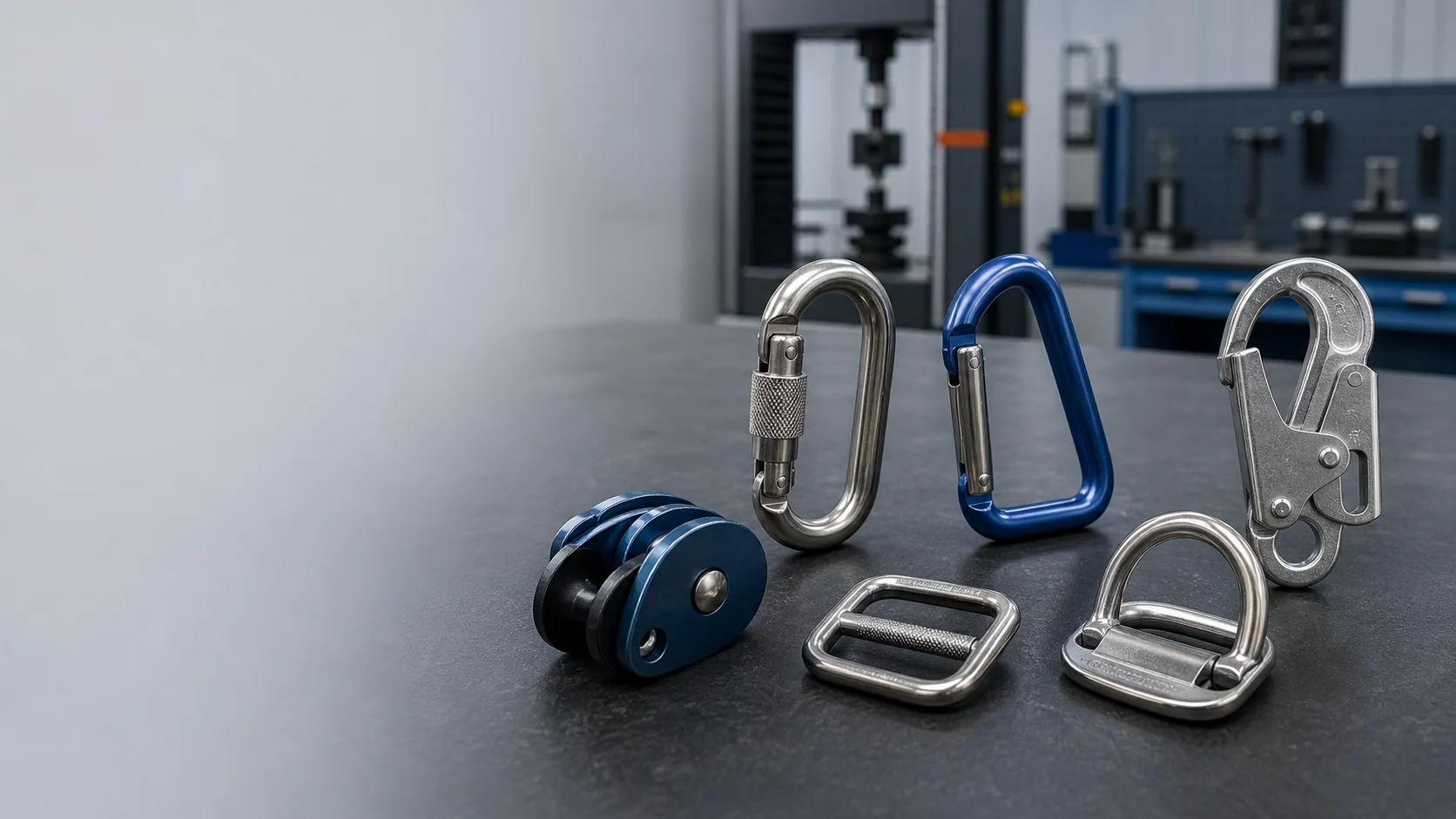
Steel, aluminum and dielectric hardware for safety harnesses, fall-arrest lanyards, rope access and rescue equipment—supported by tooling development, load testing, batch traceability and global B2B production.
Choose the route that best matches your current purchasing stage.
Built around the component needs of safety harness, lanyard, rope-access and rescue equipment manufacturers.

Steel, aluminum and dielectric connectors with multiple strength, shape and gate options.

D-rings, adjustable buckles and stamped components for safety harness manufacturing.

Rope grabs, ascenders, descenders, connectors and adjustment components.

Pulleys, rigging plates, swivel components and connectors for rescue systems.

Non-conductive connector and harness components for utility and electrical applications.

Custom stamped, CNC-machined, finished and marked hardware developed to drawing.

Present real equipment, test methods, batch records and project documents here. Replace all provisional wording with verified factory evidence before public launch.
Heavy-duty connector concept for fall protection and lanyard assemblies.
High-strength connector concept for demanding industrial fall protection systems.

Lightweight connector concept for outdoor and accessory applications.
Lightweight D-shape connector concept for industrial and outdoor systems.
Industrial aluminum connector concept for rescue and rope access.
High-strength lightweight connector concept for demanding applications.
Lightweight connector concept for rope access, rescue and fall protection.
Non-conductive connector concept for utility and electrical environments.
*Provisional website content. Verify dimensions, load ratings, material grades and standards against factory records before launch.
Each application page connects buyer problems, product categories, technical guidance and RFQ actions.
These are original layout examples. Replace them with anonymized but factual projects, verified data and real evidence before launch.
Template for documenting buyer requirements, engineering review, samples, testing and production outcome.
View template →
Use this layout to explain a real pulley development project without disclosing confidential identity.
View template →
Document material control, traceability, inspection, packaging and repeat-order support.
View template →Understand minimum breaking strength and working load limit.
Read more →Material guideCompare weight, corrosion behavior and application.
Read more →Testing guideBuyer-focused test planning for multiple loading directions.
Read more →RFQ checklistPrepare drawings, material, load, quantity and packaging.
Read more →Clear, verifiable answers help both buyers and search systems understand your capabilities.
Yes. OEM/ODM projects can be reviewed from drawings, physical samples or functional requirements.
Provide material, target load, dimensions, finish, estimated quantity, target market and packaging.
Testing scope and available documentation should be confirmed for each product or project.
Laser marking, finishes, labels and packaging can be assessed during engineering review.
Send your drawing, sample, target load or annual quantity for engineering review.